
Highlights
- Slow breathing activates the body's natural calming system.
- Long exhales are especially effective for reducing anxiety.
- Belly breathing, box breathing, 4-7-8, and the physiological sigh are easy to learn.
- Daily practice builds resilience and makes techniques easier to use under stress.
When anxiety strikes, your breathing often changes first. It becomes fast, shallow, and high in your chest. This breathing pattern sends signals to your brain that something is wrong, which can make anxiety feel even stronger.
The good news is that this connection works both ways. By changing how you breathe, you can send calming signals to your brain and body. Breathing exercises are free, simple, and can be done anywhere. This guide covers seven effective techniques to help you calm down fast.
Why Breathing Helps With Anxiety
Your nervous system has two main branches:
- The sympathetic nervous system drives the fight-or-flight response, increasing heart rate and alertness.
- The parasympathetic nervous system promotes rest and relaxation, slowing your heart and calming your body.
Breathing is one of the few bodily functions that's both automatic and under your conscious control. Slow, deep breathing, especially with long exhales, stimulates the vagus nerve, which activates the parasympathetic system. Your heart rate slows, muscles relax, and your brain receives the message that you're safe.
A 2023 study from Stanford University found that just five minutes a day of a breathing technique called cyclic sighing improved mood and reduced anxiety more than an equal amount of mindfulness meditation.
7 Breathing Exercises for Anxiety
1. Diaphragmatic (Belly) Breathing
This foundational technique helps you breathe deeply into your belly rather than your chest.
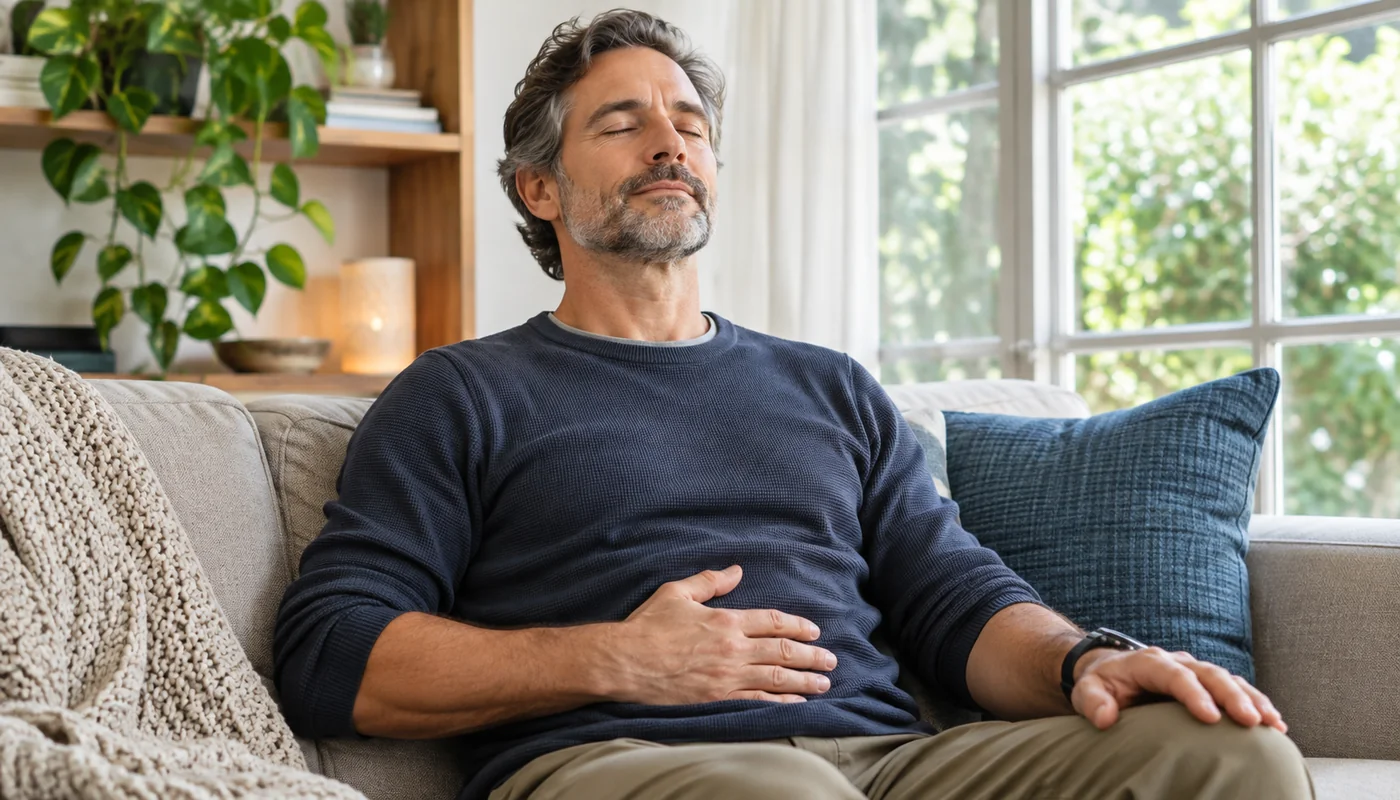
- Sit or lie comfortably. Place one hand on your chest and one on your belly.
- Breathe in slowly through your nose, letting your belly rise while your chest stays relatively still.
- Exhale slowly through your mouth, feeling your belly fall.
- Continue for three to five minutes.
2. Physiological Sigh (Cyclic Sighing)
This quick technique is one of the fastest ways to calm down.
- Take a deep breath in through your nose.
- At the top, take a second, shorter sip of air to fully inflate your lungs.
- Exhale slowly and completely through your mouth.
- Repeat one to three times for quick relief, or for five minutes as a daily practice.
3. Box Breathing
Also called square breathing, this technique is used by athletes and military personnel to stay calm under pressure.
- Inhale through your nose for a count of four.
- Hold your breath for four.
- Exhale through your mouth for four.
- Hold for four.
- Repeat for several rounds.
4. 4-7-8 Breathing
Popularized by Dr. Andrew Weil, this technique is especially helpful for relaxation and sleep.
- Inhale quietly through your nose for a count of four.
- Hold your breath for a count of seven.
- Exhale completely through your mouth, making a soft whoosh, for a count of eight.
- Repeat four times.
If holding your breath feels uncomfortable, shorten the counts while keeping the exhale longest.
5. Extended Exhale Breathing
Simply making your exhale longer than your inhale is a powerful calming tool.
- Inhale for a count of four.
- Exhale for a count of six to eight.
- Continue for two to five minutes.
6. Alternate Nostril Breathing
This technique from yoga practice can promote a sense of balance and calm.
- Sit comfortably. Use your right thumb to close your right nostril.
- Inhale through your left nostril.
- Close your left nostril with your ring finger, release your thumb, and exhale through your right nostril.
- Inhale through the right, close it, and exhale through the left.
- Continue for several rounds.
7. Counted Breathing
Counting gives an anxious mind something simple to focus on.
- Breathe naturally and count each exhale from one to ten.
- When you reach ten, start again at one.
- If you lose count, simply begin again at one.
Tips for Getting the Most From Breathing Exercises
- Practice when calm. Building the habit when you're relaxed makes it easier to use when anxious.
- Make it daily. Five minutes a day can reduce overall anxiety over time.
- Breathe through your nose when inhaling, if possible.
- Don't force it. Breathing should feel gentle. If you feel lightheaded, return to normal breathing.
- Combine with other calming techniques, such as grounding or progressive muscle relaxation.
When to Use Breathing Exercises
- Before stressful events like presentations or medical appointments
- During moments of panic or rising anxiety
- When you can't fall asleep
- During work breaks to reset your mind
- Before focused tasks or brain training to settle your attention
Breathing for Better Focus
Breathing exercises don't just calm anxiety. They can also prepare your brain for focused work. A minute or two of slow breathing before studying, working, or a brain training session can quiet distracting thoughts and help you concentrate more fully.
When to Seek Help
Breathing exercises are a helpful tool, but they're not a substitute for professional care when anxiety is severe or persistent. If anxiety interferes with daily life, causes panic attacks, or comes with depression, talk to a doctor or mental health professional. Effective treatments are available.
Frequently Asked Questions
How quickly do breathing exercises work for anxiety?
Many people feel calmer within one to two minutes. Techniques like the physiological sigh can work in just a few breaths.
Which breathing exercise is best for panic attacks?
Slow breathing with extended exhales and the physiological sigh are often helpful. Practicing regularly when calm makes them easier to use during panic.
Can breathing exercises help with sleep?
Yes. The 4-7-8 technique and extended exhale breathing can help relax the body and mind before sleep.
Is it normal to feel dizzy during breathing exercises?
Mild lightheadedness can happen if you breathe too deeply or quickly. Slow down and return to normal breathing if this occurs.
How often should I practice breathing exercises?
Practicing for about five minutes once or twice a day builds the habit and may lower your overall anxiety level. You can also use short sessions any time you feel tension rising.
Can breathing exercises help with focus?
Yes. A minute or two of slow breathing calms the nervous system and settles distracting thoughts, which makes it easier to concentrate on the task in front of you.
Can children use these breathing techniques?
Simple versions, like belly breathing or pretending to blow out birthday candles slowly, work well for kids and can help them manage big feelings.
Key Takeaways
- Slow breathing activates the body's natural calming system.
- Long exhales are especially effective for reducing anxiety.
- Belly breathing, box breathing, 4-7-8, and the physiological sigh are easy to learn.
- Daily practice builds resilience and makes techniques easier to use under stress.
- Seek professional help for severe or persistent anxiety.
Your breath is always with you, ready to help. The next time anxiety rises, pause, breathe slowly, and give your mind and body the calm they need.
This article provides general educational information and is not medical advice. A qualified healthcare professional can help you evaluate choices in relation to your health history, medications, and individual needs.