
Highlights
- Chess engages planning, memory, attention, and problem-solving.
- It clearly improves chess skill but has limited proven effects on general intelligence.
- Mentally stimulating games like chess are linked with lower dementia risk.
- Chess builds focus, patience, resilience, and social connection.
Chess has long been seen as the ultimate game of the mind. Images of grandmasters deep in thought, calculating moves far ahead, have made chess a symbol of intelligence. Many parents encourage their children to play, hoping it will boost their brainpower, and older adults often take it up to keep their minds sharp.
But does chess actually make you smarter? The answer is interesting and a little more complicated than you might expect. This article explores what research shows about chess and the brain, what chess does and doesn't improve, and why it remains a wonderful game for mental fitness.
What Chess Asks of Your Brain
Playing chess draws on many mental skills at once:
- Planning: thinking several moves ahead
- Memory: recalling openings, patterns, and previous games
- Attention and concentration: staying focused throughout a game
- Problem-solving: finding the best move in complex positions
- Visual and spatial reasoning: picturing how pieces will move
- Decision-making: weighing options and consequences
- Emotional control: staying calm after mistakes or under time pressure
Because chess engages so many skills, it's natural to assume it would strengthen them all.
What Research Shows
Chess Players Get Better at Chess
There's no doubt that practice improves chess skill. Classic studies by Adriaan de Groot, and later by William Chase and Herbert Simon, showed that expert players can remember realistic chess positions far better than beginners after seeing them for just a few seconds. Experts store thousands of patterns, or "chunks," in memory, allowing them to recognize meaningful positions instantly.
Interestingly, when pieces are placed randomly in ways that would never occur in a real game, experts' memory advantage largely disappears. This shows their skill is specific to chess patterns rather than a general super-memory.
Does Chess Improve General Intelligence?
This is where research gets more nuanced. Psychologists Giovanni Sala and Fernand Gobet have conducted several reviews of studies on chess training in children. They found that early studies often reported benefits for math and general thinking skills. But when they focused on the most rigorous studies, those comparing chess with other engaging activities, the benefits for broader skills became small or disappeared.
In other words, chess clearly makes you better at chess, but there's limited evidence that it substantially raises general intelligence or transfers to unrelated skills.
Chess and Brain Health in Older Adults
For older adults, the picture is encouraging. Studies have found that people who regularly engage in mentally stimulating activities, including board games like chess, tend to have a lower risk of dementia. An Australian study of more than 10,000 older adults, published in JAMA Network Open in 2023, found that those who regularly did activities like games, cards, chess, and puzzles had a lower risk of developing dementia over about a decade.
These studies show associations rather than proof of cause and effect, but they support the idea that keeping the mind active through challenging games is part of a brain-healthy lifestyle.
Real Benefits of Playing Chess
Even if chess doesn't make you dramatically smarter in a general sense, it offers real benefits:
A Genuine Mental Workout
Chess requires sustained concentration, careful calculation, and creative thinking. It's one of the most mentally demanding games there is.
Builds Cognitive Reserve
Engaging in challenging mental activities throughout life helps build cognitive reserve, the brain's ability to cope with aging and damage.
Improves Focus
In a world of constant distractions, chess trains you to concentrate deeply for extended periods.
Teaches Patience and Resilience
Chess teaches you to think before acting, accept mistakes, learn from losses, and keep trying.
Provides Social Connection
Playing in clubs, with friends, or online connects you with others who share your interest. Social engagement is itself good for brain health.
Lifelong Learning
There's always more to learn in chess. You can keep improving for decades, which provides ongoing challenge and satisfaction.
Calm and Absorption
Many players find chess absorbing, offering a break from everyday worries and a sense of flow.
Chess for Different Ages
Children
Chess can teach children concentration, patience, sportsmanship, and logical thinking. Even if academic benefits are modest, it's an enriching hobby that encourages thoughtful decision-making.
Adults
For adults, chess offers a mentally demanding hobby, social connection, and a break from screens and routine.
Older Adults
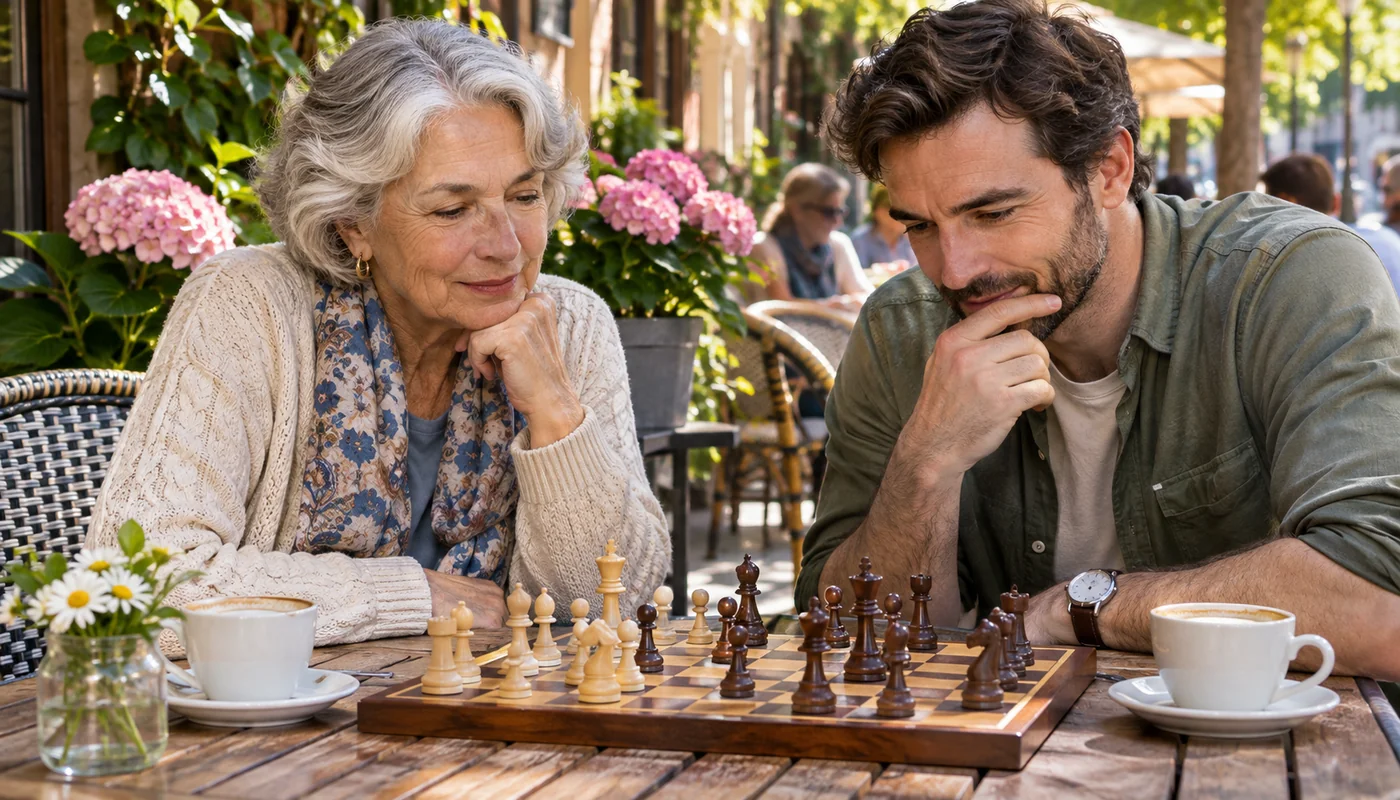
Chess is an excellent activity for keeping the mind engaged in later life, especially when played socially.
How to Get the Most Brain Benefit From Chess
- Play regularly: consistency matters more than marathon sessions
- Challenge yourself: play opponents slightly stronger than you
- Study and learn: solve puzzles, learn openings, and review your games
- Mix formats: try slower games for deep thinking and faster games for speed
- Play with people: join a club or play with friends for social benefits
- Combine with other activities: exercise, learning, and other brain games give a fuller workout
Getting Started
If you're new to chess, it's easier than ever to begin:
- Learn the rules from a book, video, or friend
- Play against beginner-level computer opponents
- Solve simple chess puzzles to learn patterns
- Join a local club or library chess group
- Play online with people around the world
Other Games That Challenge the Brain
If chess isn't your favorite, many other games offer similar mental challenges: bridge, Go, Scrabble, backgammon, strategy board games, and brain-training games that target memory, attention, and processing speed. The key is to choose something you enjoy and that challenges you.
What Happens in the Brain During Chess?
Brain imaging studies have given us a glimpse of chess in action. When players think about moves, areas involved in visual and spatial processing, planning, and memory become active. Expert players appear to use their brains more efficiently, relying on rapid pattern recognition in areas associated with memory and object recognition, while beginners rely more on slower, step-by-step reasoning. This reflects years of practice shaping how the brain handles the game.
Frequently Asked Questions
Does playing chess increase IQ?
Rigorous studies suggest any effect on general intelligence is small. Chess mainly improves chess-related skills.
Is chess good for preventing dementia?
Mentally stimulating activities like chess are linked with lower dementia risk, though chess alone isn't proven to prevent it.
Are chess players smarter?
Strong players may have higher average intelligence, but it's hard to know whether chess made them smarter or whether intelligent people are drawn to chess.
How often should I play chess for brain health?
Regular play, a few times a week, is a great goal, especially combined with other healthy habits.
Is online chess as good as playing in person?
Online chess offers the same mental challenge. Playing in person adds valuable social interaction.
Can older adults learn chess from scratch?
Absolutely. Many people learn chess later in life and enjoy steady improvement.
Key Takeaways
- Chess engages planning, memory, attention, and problem-solving.
- It clearly improves chess skill but has limited proven effects on general intelligence.
- Mentally stimulating games like chess are linked with lower dementia risk.
- Chess builds focus, patience, resilience, and social connection.
- It's a rewarding lifelong hobby for brains of all ages.
Chess may not turn you into a genius overnight, but it's a fantastic way to keep your mind active, focused, and engaged. Set up a board, find an opponent, and enjoy one of the world's greatest mental challenges.
This article provides general educational information and is not medical advice. A qualified healthcare professional can help you evaluate choices in relation to your health history, medications, and individual needs.