
Highlights
- DHA is a key building block of the brain.
- Eating fish regularly is linked with better brain health and lower dementia risk.
- Fish oil supplement trials in healthy adults have shown limited cognitive benefits.
- Supplements may help people who eat little or no fish.
Fish oil is one of the most popular supplements in the world. Many people take it hoping to protect their heart, ease joint pain, and keep their brain sharp. The idea makes sense: your brain is rich in omega-3 fats, and people who eat a lot of fish tend to have healthier brains.
But does taking fish oil supplements actually help the brain? The research is more mixed than many advertisements suggest. This article explains what omega-3s do in the brain, what studies have found, and how to get the benefits in the most effective way.
What Are Omega-3 Fatty Acids?
Omega-3s are a type of polyunsaturated fat that the body can't make in large enough amounts on its own, so we need to get them from food. The three main types are:
- DHA (docosahexaenoic acid): found mainly in fish and seafood; a major building block of the brain
- EPA (eicosapentaenoic acid): also found in fish; has anti-inflammatory effects
- ALA (alpha-linolenic acid): found in plant foods like walnuts, flaxseed, and chia seeds; the body converts only small amounts into EPA and DHA
Fish oil supplements mainly provide EPA and DHA.
Why Omega-3s Matter for the Brain
Building Brain Cells
DHA is one of the most abundant fats in the brain. It's a key part of the membranes surrounding brain cells, helping keep them flexible so that signals can pass smoothly between neurons.
Reducing Inflammation
EPA and DHA help regulate inflammation. Chronic inflammation is thought to contribute to brain aging and diseases like Alzheimer's.
Supporting Blood Vessels
Omega-3s can help lower triglycerides and support healthy blood vessels, which in turn supports blood flow to the brain.
Mood
Omega-3s, especially EPA, have been studied for depression, with some evidence of benefit as an addition to standard treatment.
What the Research Shows
Eating Fish Is Linked With Better Brain Health
Observational studies have consistently found that people who eat fish regularly tend to have:
- Slower cognitive decline
- Lower risk of dementia
- Larger brain volumes in areas related to memory
For example, research from the Rush Memory and Aging Project found that older adults who ate seafood at least once a week had slower declines in memory and thinking.
Higher Blood Omega-3 Levels
Studies measuring omega-3 levels in the blood have found that people with higher levels tend to have better brain structure and a lower risk of dementia.
Supplement Trials Are Mixed
When researchers give people fish oil supplements in randomized controlled trials, results have generally been disappointing for cognitive benefits in healthy older adults:
- The large US VITAL trial found that omega-3 supplements did not significantly improve cognitive function over several years in healthy older adults.
- A trial of DHA supplements in people with mild to moderate Alzheimer's disease, published in JAMA in 2010, found no slowing of decline.
- Some trials have found small benefits in specific groups, such as people with very low omega-3 levels or those in the earliest stages of memory problems.
Why the Difference Between Fish and Supplements?
Researchers have several theories:
- The whole food matters: fish provides protein, vitamin D, selenium, B12, and other nutrients that work together.
- Healthy lifestyles: people who eat a lot of fish may also have other healthy habits.
- Timing: omega-3s may need to be consumed over many years, starting earlier in life, to make a difference.
- Baseline levels: people who already get enough omega-3s may not benefit from more.
- Replacing less healthy foods: eating fish often replaces red or processed meat.
Who Might Benefit From Fish Oil?
Fish oil supplements may be most useful for:
- People who rarely or never eat fish
- People with low blood omega-3 levels
- Vegetarians and vegans, who can use algae-based omega-3 supplements
- People with high triglycerides, under medical supervision
How Much Omega-3 Do You Need?
Many health organizations recommend eating fish, particularly fatty fish, at least twice a week. This provides roughly 250 to 500 milligrams of EPA and DHA a day on average. If you take a supplement, check the label for the actual amount of EPA and DHA, not just the total fish oil.
Best Food Sources
Fatty Fish (Highest in EPA and DHA)
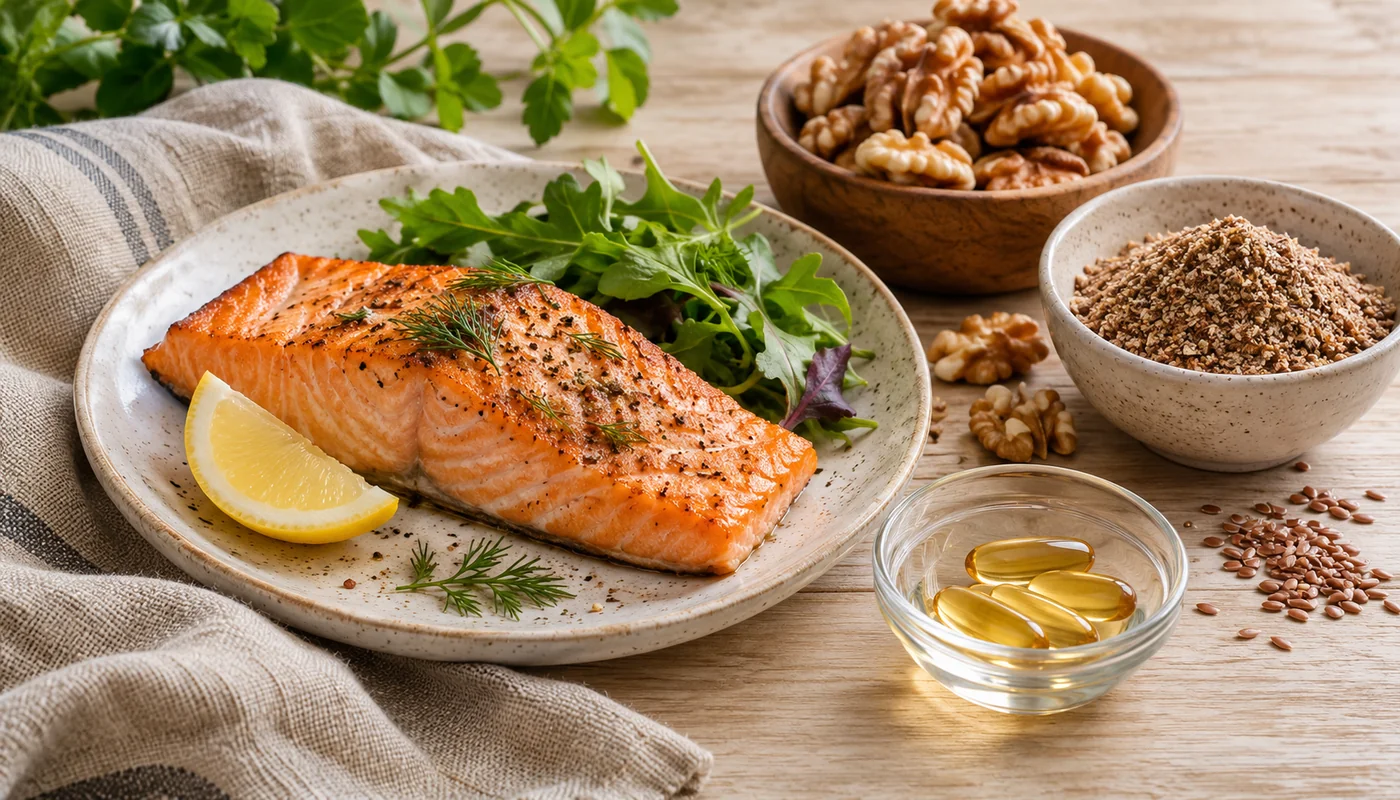
- Salmon
- Sardines
- Mackerel
- Herring
- Trout
- Anchovies
Plant Sources (ALA)
- Walnuts
- Flaxseed
- Chia seeds
- Hemp seeds
- Soybeans and tofu
Other Sources
- Omega-3 enriched eggs
- Algae oil, a good option for vegans
Safety Tips
- Talk to your doctor if you take blood thinners, as high doses of fish oil may increase bleeding risk.
- Watch for heart rhythm effects: some studies have linked high-dose omega-3 supplements with a slightly increased risk of atrial fibrillation in certain people.
- Choose quality products: look for third-party testing for purity and freshness.
- Store properly: keep fish oil away from heat and light to prevent it going rancid.
- Choose low-mercury fish: salmon, sardines, and trout are lower in mercury than large predatory fish like swordfish and king mackerel.
Easy Ways to Eat More Omega-3s
- Have canned salmon or sardines on whole-grain toast
- Add walnuts to oatmeal or salads
- Sprinkle ground flaxseed or chia seeds on yogurt
- Plan a weekly fish dinner, such as baked salmon or grilled trout
- Try fish tacos or a tuna and bean salad
The Bigger Picture
Omega-3s are one helpful piece of a brain-healthy lifestyle. For the greatest benefits, combine a fish-rich diet with regular exercise, good sleep, social connection, mental challenges such as learning and brain games, and good management of blood pressure and blood sugar.
Omega-3s Across the Lifespan
Omega-3s matter at every stage of life. During pregnancy and early childhood, DHA is vital for the developing brain and eyes, which is why it's often added to prenatal vitamins and infant formula. In adulthood, a steady intake helps maintain brain cell membranes and supports heart health. In later life, some researchers believe that long-term omega-3 intake, built up over decades, may matter more than short bursts of supplementation. This is one more reason to make fish and omega-3-rich foods a regular, lifelong habit rather than a quick fix. Small, consistent choices tend to work best over time.
Frequently Asked Questions
Does fish oil improve memory?
In healthy adults, fish oil supplements have generally not been shown to improve memory. Eating fish regularly is linked with better brain health over time.
Is it better to eat fish or take fish oil?
Eating fish is generally better, as it provides many nutrients beyond omega-3s.
Can fish oil prevent dementia?
Supplement trials haven't shown that fish oil prevents dementia, though diets rich in fish are linked with lower risk.
What about vegetarians?
Algae-based omega-3 supplements provide DHA and EPA without fish.
Key Takeaways
- DHA is a key building block of the brain.
- Eating fish regularly is linked with better brain health and lower dementia risk.
- Fish oil supplement trials in healthy adults have shown limited cognitive benefits.
- Supplements may help people who eat little or no fish.
- Aim for fatty fish twice a week as part of a brain-healthy diet.
When it comes to omega-3s and your brain, your plate matters more than your pill bottle. Enjoy fish regularly, add some walnuts and seeds, and let these healthy fats support your brain for years to come.
This article provides general educational information and is not medical advice. A qualified healthcare professional can help you evaluate choices in relation to your health history, medications, and individual needs.