
Highlights
- Processing speed and working memory may decline gradually with age.
- Knowledge, vocabulary, and emotional understanding often stay strong or improve.
- The brain remains adaptable throughout life.
- Learning new skills can improve memory in older adults.
"You can't teach an old dog new tricks." It's a saying many of us have heard, and some of us have come to believe. As we age, we might notice that learning a new phone app, remembering names, or picking up a new hobby takes a bit longer than it used to. So is learning really harder as we get older?
The answer is more nuanced, and much more encouraging, than the old saying suggests. Some aspects of learning do change with age, but others stay strong or even improve. And the brain remains capable of learning throughout life. This article explores what science says about learning and aging, and how to learn effectively at any age.
What Changes With Age
Processing Speed
One of the most consistent findings is that processing speed, how quickly we take in and respond to information, gradually slows from early adulthood. This can make learning feel slower, especially when information comes quickly.
Working Memory
Working memory, the ability to hold and manipulate information in mind, tends to decline gradually with age. This can make it harder to juggle several new pieces of information at once.
Attention and Filtering Distractions
Some research suggests older adults may find it harder to filter out distractions, which can affect learning in busy environments.
Recall of New Information
Recalling newly learned names, details, or facts may take more effort, though recognition, knowing something when you see it, often remains strong.
What Stays Strong or Improves
Knowledge and Vocabulary
Crystallized intelligence, the knowledge, skills, and vocabulary built up over a lifetime, tends to stay stable or grow well into later life. A large 2015 study by Joshua Hartshorne and Laura Germine, which tested tens of thousands of people online, found that different mental abilities peak at different ages. Vocabulary, for example, often peaked in people's 60s or even 70s.
Emotional Understanding
The same study found that the ability to read other people's emotions peaked in midlife, around the 40s and 50s.
Experience and Wisdom
Older adults have a vast store of experience that helps them understand new information in context, make connections, and see the bigger picture.
Motivation and Self-Knowledge
Many older learners know what they want to learn and why, and they understand how they learn best.
Fluid vs. Crystallized Intelligence
Psychologists often distinguish between two broad types of intelligence:
- Fluid intelligence: the ability to solve new problems, reason quickly, and think flexibly. It tends to peak in early adulthood and gradually decline.
- Crystallized intelligence: accumulated knowledge and skills. It tends to grow or remain stable throughout much of life.
Learning something new draws on both. Older adults can use their crystallized knowledge to support new learning.
The Brain Stays Adaptable
The brain's ability to change, called neuroplasticity, continues throughout life. Research has shown that older adults can form new connections and even increase the volume of certain brain regions through learning and exercise.
Evidence From Research
- A study led by Denise Park at the University of Texas at Dallas found that older adults who spent three months learning demanding new skills, such as digital photography or quilting, improved their memory compared with those who did easier activities.
- Studies of older adults learning to juggle have found changes in brain regions related to movement and vision.
- Research on exercise has shown that a year of regular walking can increase the size of the hippocampus, a key memory region, in older adults.
What About Languages?
Research suggests there may be an advantage to learning a language's grammar early in life for reaching native-like fluency. But adults can and do learn languages successfully, often making faster progress in the early stages thanks to better study skills. Fluency may not be the only goal; communication, enjoyment, and the mental workout all have value.
How to Learn Effectively at Any Age
Take Your Time
Allow extra time to absorb information. Slowing down can improve understanding and memory.
Reduce Distractions
Learn in a quiet environment and focus on one thing at a time.
Connect New to Old
Link new information to what you already know. Your lifetime of experience is a powerful learning tool.
Use Memory Strategies
Visualization, chunking, and mnemonics can make new information easier to remember.
Practice Retrieval
Test yourself rather than simply rereading. Recalling information strengthens memory.
Space Your Learning
Review over several days instead of cramming.
Learn Hands-On
Doing, practicing, and applying skills helps them stick.
Be Patient and Positive
Research suggests that negative beliefs about aging can actually hurt memory performance. Believing you can learn helps you learn.
Stay Healthy
Exercise, good sleep, a balanced diet, and managing blood pressure and blood sugar all support learning.
Keep Challenging Yourself
Regular mental challenges, such as learning new skills, reading, puzzles, and brain games that adapt to your level, help keep your brain in learning shape.
Learn With Others
Classes, clubs, and study groups add motivation and social connection.
The Power of Mindset
How you think about aging may affect how well you learn. Research by Becca Levy at Yale has found that older adults with more positive beliefs about aging tend to perform better on memory tests and even live longer than those with negative beliefs. In some experiments, simply exposing older adults to negative stereotypes about aging temporarily worsened their memory performance.
This suggests that the old saying about teaching old dogs new tricks may itself be part of the problem. If you believe you can't learn, you may give up sooner or avoid trying. If you believe you can, you're more likely to persist through the challenging early stages. Seeing yourself as a capable, curious learner is one of the best ways to set yourself up for success.
Real-Life Examples
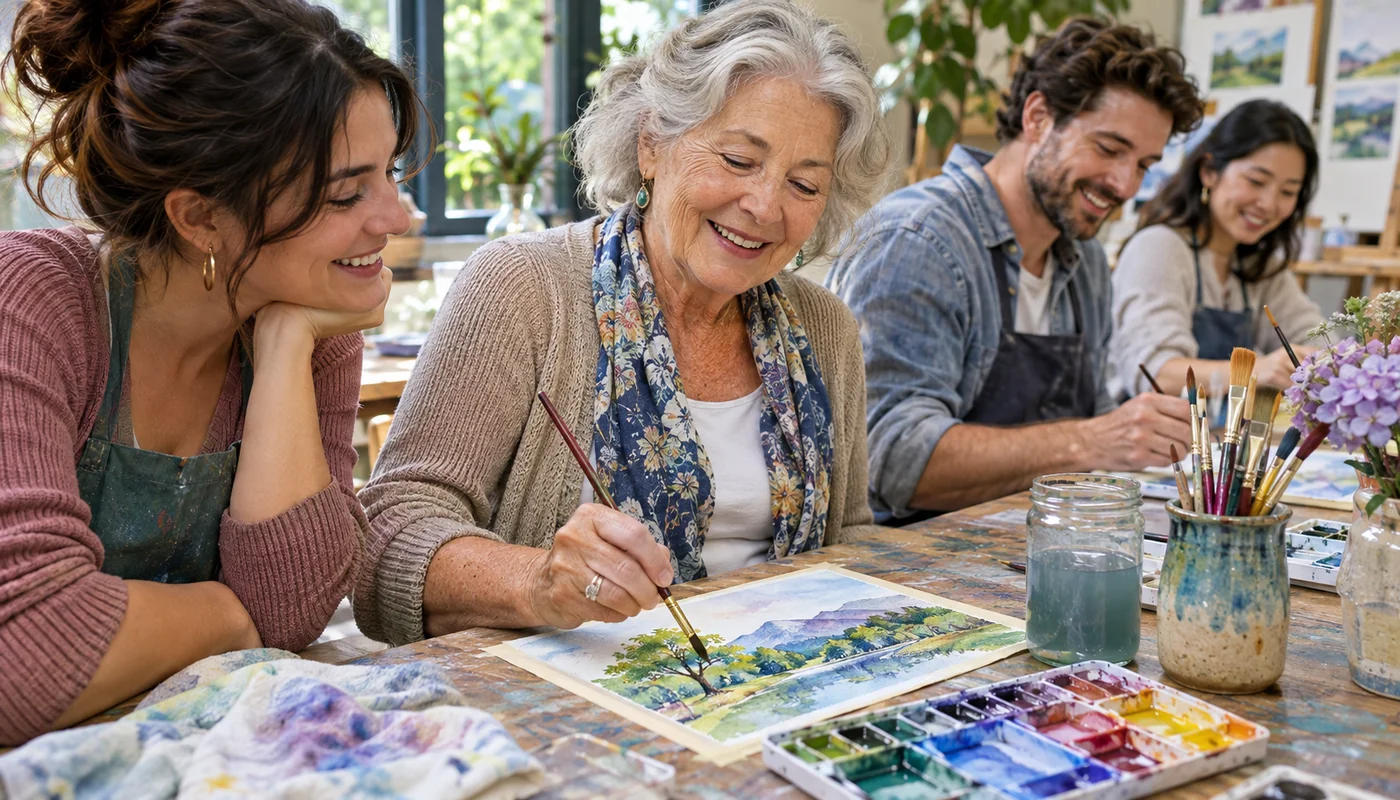
Countless people prove that age is no barrier to learning. People have earned university degrees in their 80s and 90s, taken up painting in retirement and exhibited their work, learned to swim in their 70s, and mastered new languages to connect with grandchildren abroad. Many find that learning in later life is especially rewarding because they're doing it purely for enjoyment and personal growth, without the pressures of exams or careers.
Frequently Asked Questions
Do we lose the ability to learn as we age?
No. Learning may become somewhat slower in some ways, but the brain remains capable of learning throughout life.
What gets better with age?
Vocabulary, knowledge, emotional understanding, and judgment often stay strong or improve.
Can older adults learn languages?
Yes. Many adults learn languages successfully at any age.
Does learning new things help the aging brain?
Yes. Learning demanding new skills has been shown to improve memory and support brain health.
How can I learn faster as I get older?
Reduce distractions, connect new information to existing knowledge, use retrieval practice, space your learning, and stay physically active.
Key Takeaways
- Processing speed and working memory may decline gradually with age.
- Knowledge, vocabulary, and emotional understanding often stay strong or improve.
- The brain remains adaptable throughout life.
- Learning new skills can improve memory in older adults.
- Smart strategies and healthy habits make learning easier at any age.
Learning may look a little different as we age, but it never stops being possible. Your experience, curiosity, and determination are powerful assets. Keep learning, and your brain will keep growing with you.
This article provides general educational information and is not medical advice. A qualified healthcare professional can help you evaluate choices in relation to your health history, medications, and individual needs.