
Highlights
- Practical tools can make everyday life easier for seniors with memory problems.
- Calendars, pill organizers, and reminders are simple and effective.
- A landing spot, labels, and trackers help find things.
- Safety tools and money management systems protect independence.
As we get older, many of us notice small changes in memory. Names take longer to recall, appointments are easier to forget, and keys seem to wander off more often. For some seniors, memory problems are mild and occasional; for others, they're more noticeable and begin to affect daily routines.
Whatever the cause, the right tools and strategies can make a real difference. Practical aids can reduce stress, protect independence, and help seniors feel more confident. This article shares simple, effective tools for managing memory problems in everyday life, along with tips for staying sharp and knowing when to seek help.
Understanding Memory Changes in Later Life
Some memory changes are a normal part of aging, such as:
- Taking longer to recall names or words
- Occasionally misplacing items
- Needing more time to learn new things
- Being more easily distracted
Other changes may signal a medical issue, such as forgetting recent conversations entirely, getting lost in familiar places, or struggling with familiar tasks. It's always worth discussing persistent or worsening memory problems with a doctor, as many causes are treatable.
Using memory tools isn't a sign of weakness. Many sharp, capable people rely on lists, calendars, and reminders. Tools simply free up mental energy for the things that matter most.
Tools for Keeping Track of Time and Appointments
Large Wall Calendar
A big calendar in a central spot, such as the kitchen, makes appointments, birthdays, and events visible at a glance. Cross off each day to keep track of the date.
Day and Date Clock
Clocks that display the day of the week, date, and time of day, such as "Tuesday morning," help with orientation, especially for people who sometimes lose track of time.
Daily Planner or Notebook
A simple notebook for each day's plans, to-do lists, and notes from phone calls can be very helpful. Keep it in the same place every day.
Phone or Smart Speaker Reminders
Phones and smart speakers can announce reminders for appointments, medications, and tasks. Voice commands make them easy to use.
Whiteboard
A whiteboard by the door can list the day's plans and reminders, such as "Doctor at 2 p.m." or "Take umbrella."
Tools for Managing Medications
Pill Organizers
Weekly pill boxes with compartments for each day, and for morning and evening, make it easy to see whether medications have been taken.
Automatic Pill Dispensers
These devices dispense medications at set times and can sound alarms. Some can alert family members if a dose is missed.
Pharmacy Blister Packs
Many pharmacies can package medications by day and time.
Medication Chart
A simple chart on the fridge listing each medication, its purpose, and timing can help, especially when several medicines are involved.
Tools for Finding Things
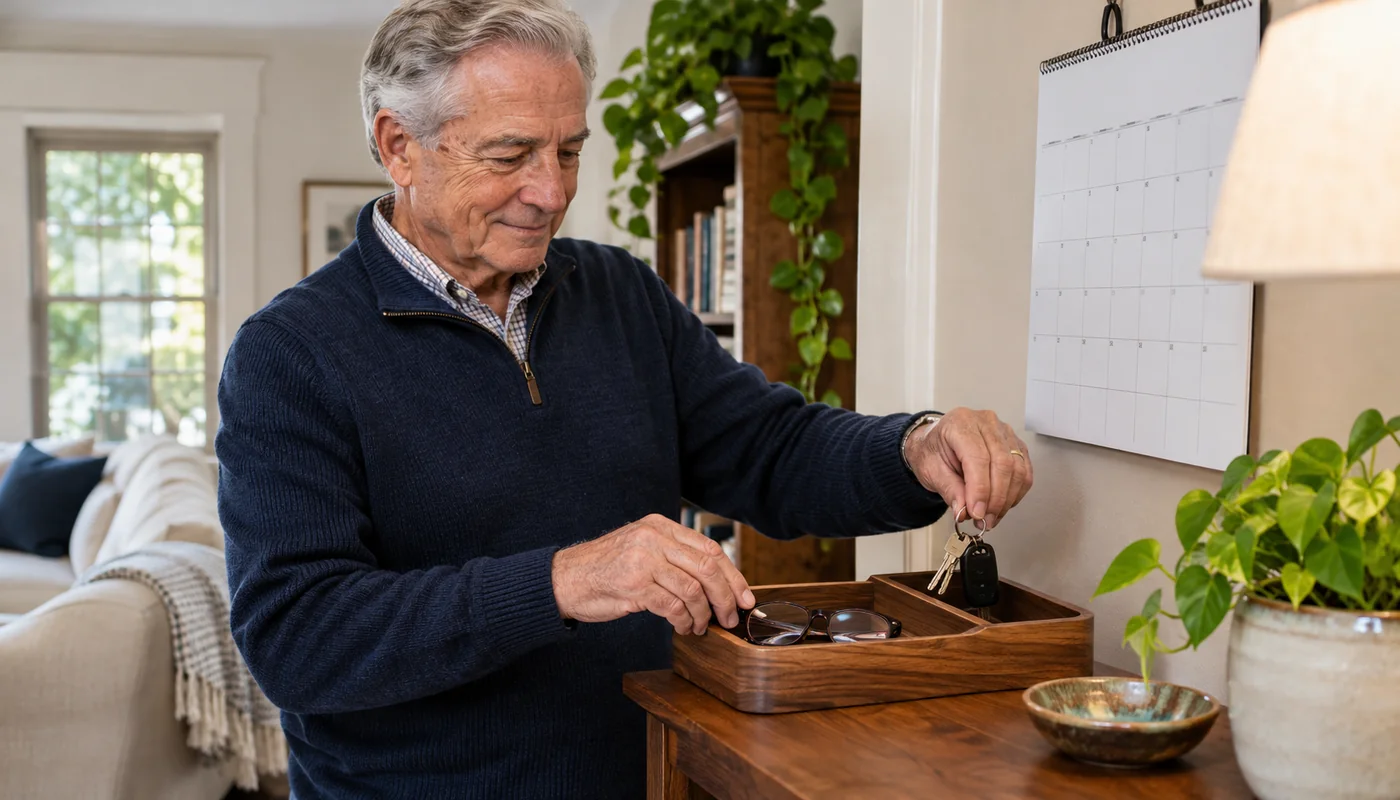
A "Landing Spot"
Choose one place near the door for keys, glasses, wallet, and phone. A bowl, tray, or hook works well. Always put items there.
Item Trackers
Small Bluetooth trackers attached to keys, wallets, or bags can be found using a phone.
Labels
Labeling cupboards, drawers, and containers helps locate items quickly. Pictures can be useful as well as words.
Clear Storage
See-through containers make it easier to find things.
Tools for Safety at Home
- Automatic shut-off devices for stoves and kettles
- Timers when cooking
- Notes by the door such as "Lock the door" or "Turn off the lights"
- Emergency contact list by the phone
- Personal alarms or medical alert devices
- Good lighting and night lights to prevent falls
Tools for Remembering People and Conversations
- Photo contact list: phone contacts with photos, or a printed sheet of family and friends with names
- Conversation notebook: jot down key points from phone calls and visits
- Memory book: a book with photos and notes about family, friends, and important events
Tools for Managing Money
- Set up automatic bill payments
- Use a simple budget sheet
- Keep important documents in one clearly labeled folder
- Consider giving a trusted family member access to accounts or setting up alerts
- Be cautious of scams; agree a rule never to give financial details over the phone
Daily Habits That Help
Keep a Routine
Doing things at the same time each day, such as taking medications with breakfast, makes them easier to remember.
Do One Thing at a Time
Multitasking increases forgetfulness. Focus on one task before starting another.
Say It Out Loud
Saying "I'm putting my glasses on the bookshelf" helps memory.
Review the Day
Each morning, review the calendar; each evening, glance at tomorrow's plans.
Keeping the Brain Active
Alongside practical tools, staying mentally, physically, and socially active supports memory:
- Daily walks or gentle exercise
- Puzzles, card games, and brain games
- Reading and learning new things
- Regular contact with friends and family
- Hobbies such as gardening, music, or crafts
- Good sleep and a healthy diet
When to See a Doctor
Talk to a doctor if memory problems:
- Are getting worse
- Affect safety or daily life
- Come with confusion, mood changes, or personality changes
- Appear suddenly
A doctor can check for treatable causes such as medication side effects, vitamin deficiencies, thyroid problems, infections, and depression.
Setting Up Tools Without Taking Over
If you're helping an older parent or relative, involve them in choosing and setting up memory aids. People are much more likely to use tools they've chosen themselves. Introduce one or two at a time rather than transforming the whole house overnight. Explain how each tool helps them stay independent, rather than suggesting they can't cope. Practice using new devices together until they feel comfortable, and write simple instructions in large print. Respect their preferences; some people love technology, while others prefer paper calendars and handwritten notes. The goal is support, not control.
A Sample Daily Routine With Memory Tools
- Morning: Check the day-and-date clock, review the wall calendar, take morning medications from the pill organizer with breakfast
- Mid-morning: Short walk, then a puzzle or brain game
- Lunch: Glance at the whiteboard for afternoon plans
- Afternoon: Appointments or social activities, with a phone reminder an hour before
- Evening: Evening medications, note anything important in the daily notebook, check tomorrow's plans
- Before bed: Keys, glasses, and phone back on the landing spot
A predictable routine, supported by simple tools, makes daily life smoother and more relaxed for many people with memory changes.
Frequently Asked Questions
What are the best memory aids for seniors?
Large calendars, pill organizers, reminder devices, a landing spot for keys, and notebooks are among the most helpful.
Is it normal for seniors to forget things?
Some forgetfulness is normal with age. Problems that affect daily life should be checked.
Can technology help seniors with memory problems?
Yes. Phone reminders, smart speakers, item trackers, and automatic pill dispensers can all help.
How can family members help?
By helping set up tools, sharing calendars, checking in regularly, and encouraging independence.
Do memory aids make memory worse?
No. They reduce stress and free up mental energy, supporting independence.
Key Takeaways
- Practical tools can make everyday life easier for seniors with memory problems.
- Calendars, pill organizers, and reminders are simple and effective.
- A landing spot, labels, and trackers help find things.
- Safety tools and money management systems protect independence.
- Staying active and seeing a doctor for persistent problems are also important.
Memory changes don't have to mean losing independence. With the right tools and habits, seniors can stay organized, safe, and confident in their daily lives.
This article provides general educational information and is not medical advice. A qualified healthcare professional can help you evaluate choices in relation to your health history, medications, and individual needs.