
Highlights
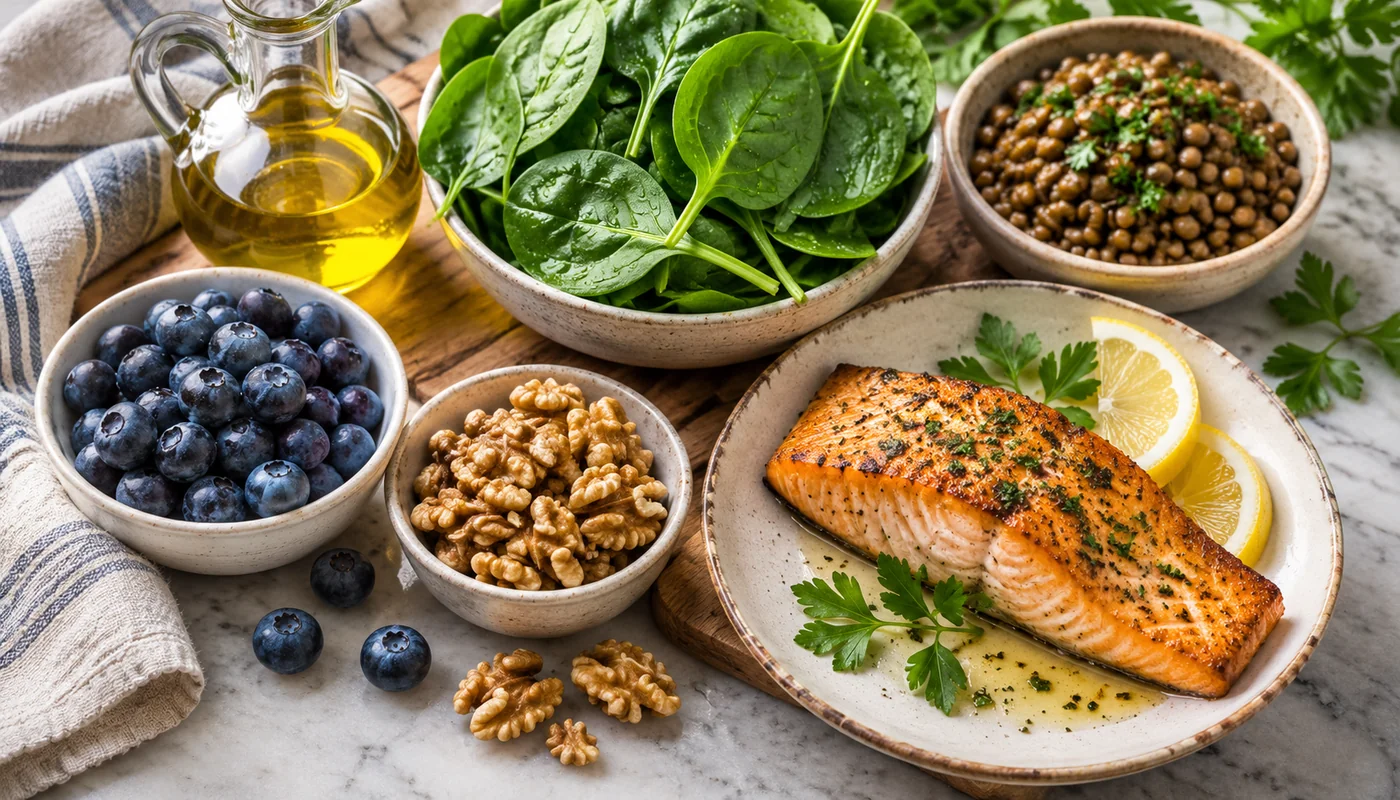
- Leafy greens, berries, fatty fish, nuts, and olive oil top the list of brain foods.
- Whole grains, beans, eggs, and colorful produce also support brain health.
- Overall eating patterns like the Mediterranean and MIND diets matter most.
- Limit ultra-processed foods, sugar, and excess alcohol.
Every thought you think, every memory you form, and every decision you make depends on a brain that's built and fueled by the food you eat. Your brain is made largely of fat, uses about a fifth of your body's energy, and relies on a steady supply of nutrients to stay healthy over a lifetime.
Scientists have spent decades studying how diet affects brain aging, and some clear patterns have emerged. Certain foods appear again and again in research on healthy brains. This article highlights the best foods for long-term brain health, explains why they matter, and offers easy ways to include them in your everyday meals.
Why Diet Matters for Your Brain
Food affects the brain in several ways:
- Building blocks: Healthy fats, especially omega-3s, are part of brain cell membranes.
- Protection: Antioxidants and anti-inflammatory compounds help protect brain cells from damage.
- Blood flow: Diets that support heart and blood vessel health keep oxygen and nutrients flowing to the brain.
- Brain chemistry: Nutrients help produce neurotransmitters involved in mood, focus, and memory.
- Gut-brain connection: A healthy gut, fed by fiber-rich foods, may support brain health through the gut-brain axis.
The Best Foods for Brain Health
1. Leafy Green Vegetables
Spinach, kale, collard greens, Swiss chard, and lettuce are rich in vitamin K, folate, lutein, and beta-carotene. A study from Rush University found that older adults who ate about one serving of leafy greens a day had cognitive decline equivalent to being about 11 years younger than those who rarely ate them.
Try: Add spinach to omelets, smoothies, soups, and pasta sauces, or enjoy a daily side salad.
2. Berries
Blueberries, strawberries, blackberries, and raspberries are packed with flavonoids, particularly anthocyanins, which give them their rich colors. Research from the Nurses' Health Study found that women who ate more berries delayed cognitive aging by up to two and a half years.
Try: Top cereal, yogurt, or oatmeal with berries. Frozen berries are just as nutritious and convenient.
3. Fatty Fish
Salmon, sardines, mackerel, trout, and herring are rich in omega-3 fatty acids, especially DHA, a major structural component of the brain. People who eat fish regularly tend to have more gray matter in brain areas related to memory and emotion.
Try: Aim for fish about twice a week. Canned salmon and sardines are affordable options.
4. Nuts
Nuts provide healthy fats, protein, vitamin E, and antioxidants. Walnuts are especially high in a plant-based omega-3 called alpha-linolenic acid. Studies have linked regular nut consumption with better cognitive function in older adults.
Try: A small handful a day as a snack, or sprinkled on salads and cereal.
5. Olive Oil
Extra-virgin olive oil is a cornerstone of the Mediterranean diet. It contains healthy monounsaturated fats and polyphenols with anti-inflammatory properties. A large Harvard study published in 2024 found that people who consumed more than half a tablespoon of olive oil a day had a lower risk of dying from dementia.
Try: Use olive oil as your main cooking fat and for salad dressings.
6. Whole Grains
Oats, brown rice, quinoa, barley, and whole-wheat bread provide steady energy and fiber, plus B vitamins that support brain function.
Try: Swap white bread and rice for whole-grain versions, and start your day with oatmeal.
7. Beans and Lentils
Beans, lentils, and chickpeas offer fiber, protein, folate, and minerals. They help keep blood sugar steady and support a healthy gut.
Try: Add beans to soups, stews, salads, and tacos at least a few times a week.
8. Eggs
Eggs are an excellent source of choline, which the body uses to make acetylcholine, a brain chemical important for memory. They also provide B vitamins and high-quality protein.
Try: Scrambled, boiled, or in a vegetable frittata.
9. Cruciferous Vegetables
Broccoli, cauliflower, Brussels sprouts, and cabbage contain antioxidants, vitamin K, and compounds that may help protect cells.
Try: Roast with olive oil and garlic for a delicious side dish.
10. Tea and Coffee
Both contain caffeine and antioxidants. Moderate coffee and tea drinking has been linked with a lower risk of cognitive decline in several studies. Green tea also contains L-theanine, which may support calm focus.
Try: Enjoy a cup or two daily, ideally before mid-afternoon.
11. Dark Chocolate and Cocoa
Cocoa contains flavanols that may improve blood flow to the brain. Choose dark chocolate with at least 70 percent cocoa and enjoy it in moderation.
12. Colorful Fruits and Vegetables
Oranges, bell peppers, tomatoes, carrots, sweet potatoes, and beets provide a wide range of vitamins and antioxidants. Eating a rainbow of produce gives your brain a broad mix of protective nutrients.
Eating Patterns That Support the Brain
Individual foods matter, but overall eating patterns matter even more. Research highlights three:
- The Mediterranean diet: rich in vegetables, fruits, whole grains, legumes, fish, nuts, and olive oil
- The DASH diet: designed to lower blood pressure, emphasizing fruits, vegetables, and low-fat dairy
- The MIND diet: a combination of the two, specifically focused on brain health, with emphasis on leafy greens and berries
These patterns have all been associated with better cognitive health and slower brain aging.
Foods to Limit
- Ultra-processed foods: Research has linked high intake with faster cognitive decline.
- Sugary drinks and sweets: High sugar intake is linked with poorer metabolic and brain health.
- Fried foods and fast food
- Processed meats
- Excess salt: raises blood pressure
- Too much alcohol
Simple Ways to Eat for Your Brain
- Eat a salad or leafy greens daily
- Keep frozen berries on hand
- Have fish twice a week
- Snack on nuts instead of chips
- Cook with olive oil
- Add beans to at least three meals a week
- Choose whole grains
- Drink water throughout the day
A Brain-Healthy Day of Eating
- Breakfast: Oatmeal with blueberries and walnuts, plus green tea or coffee
- Lunch: Spinach salad with chickpeas, tomatoes, peppers, and olive oil dressing
- Snack: An apple and a handful of almonds
- Dinner: Baked salmon with roasted broccoli and quinoa
- Treat: A square of dark chocolate
Food Works Best With Other Healthy Habits
A brain-healthy diet is most powerful when combined with regular exercise, good sleep, social connection, stress management, and keeping your mind active through learning, reading, and brain games.
Frequently Asked Questions
What is the number one food for brain health?
There's no single magic food, but leafy greens, berries, and fatty fish have some of the strongest evidence.
Can diet prevent dementia?
No diet guarantees prevention, but healthy eating patterns are linked with lower risk of cognitive decline.
How quickly does diet affect the brain?
Some effects, like steadier energy, can appear quickly. Long-term benefits build over years.
Do I need supplements for brain health?
Most people can get what they need from a varied diet. Supplements may help if you have a deficiency, such as low vitamin B12.
Key Takeaways
- Leafy greens, berries, fatty fish, nuts, and olive oil top the list of brain foods.
- Whole grains, beans, eggs, and colorful produce also support brain health.
- Overall eating patterns like the Mediterranean and MIND diets matter most.
- Limit ultra-processed foods, sugar, and excess alcohol.
- Diet works best alongside exercise, sleep, and an active mind.
Feeding your brain well doesn't require complicated recipes or expensive ingredients. A few simple changes, like a daily handful of berries or a weekly salmon dinner, can nourish your mind for years to come.
This article provides general educational information and is not medical advice. A qualified healthcare professional can help you evaluate choices in relation to your health history, medications, and individual needs.