
Highlights
- Memory includes several systems, and different games target different ones.
- Matching, sequence, n-back, number, and name-face games are excellent choices.
- Effective games adapt to your level and track progress.
- Combine games with real-world memory practice and memory strategies.
Brain games have exploded in popularity. Whether on a phone, tablet, computer, or the kitchen table, millions of people play them every day hoping to keep their memory sharp. But with so many options available, which games actually give your memory a meaningful workout?
Not all brain games are created equal. Some mainly entertain, while others directly challenge the memory systems you rely on every day. This article explains how memory works, which types of brain games target it most effectively, and how to get the most from your practice.
Understanding Memory
Memory isn't one single ability. It includes several systems that work together:
- Working memory: holding and using information in your mind for a short time, like remembering a phone number while dialing
- Short-term memory: briefly storing information, such as a list someone just read to you
- Long-term memory: storing information for days, years, or a lifetime
- Visual and spatial memory: remembering what things look like and where they are
- Verbal memory: remembering words, names, and spoken information
- Associative memory: linking pieces of information, such as a name with a face
Different games target different types of memory, so variety gives you a well-rounded workout.
The Best Types of Memory Games
1. Matching Pair Games
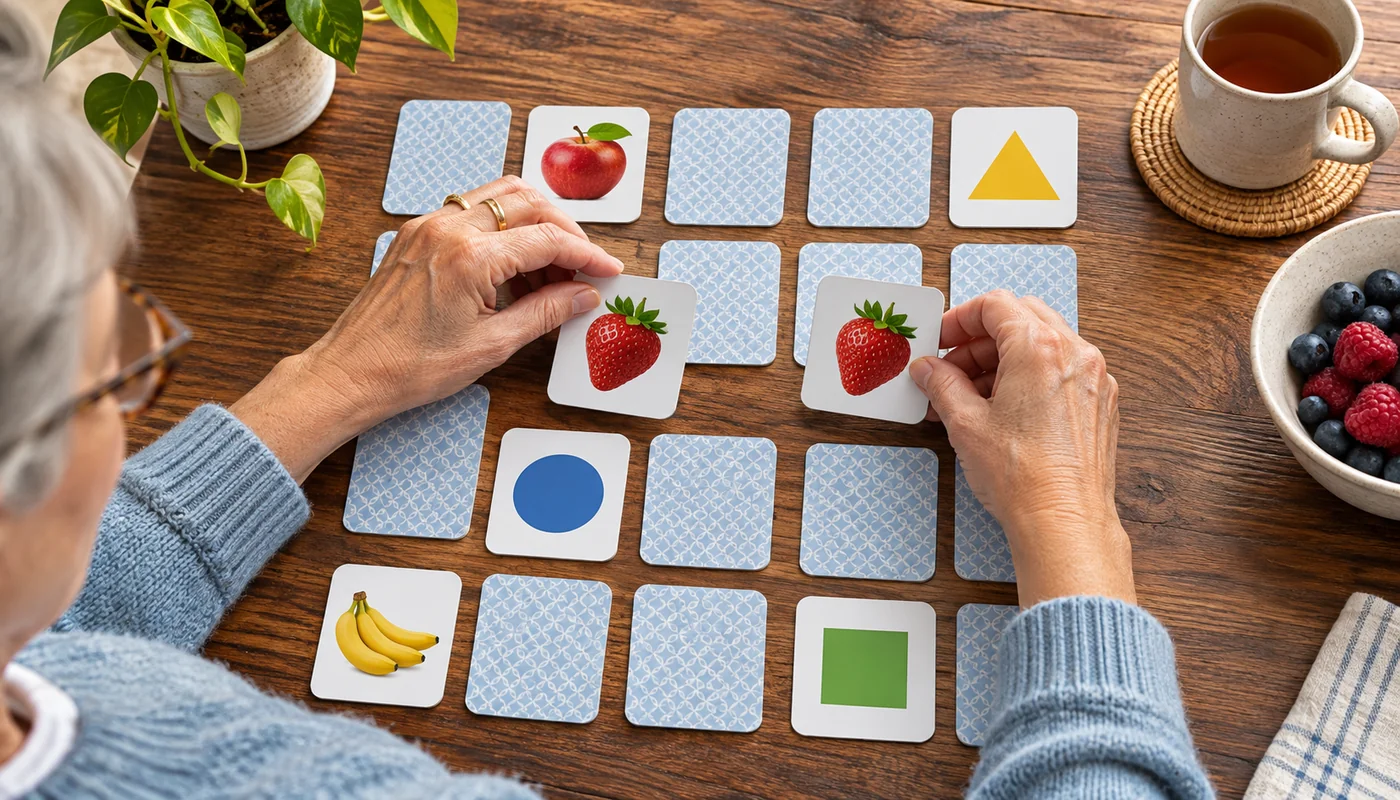
In classic "concentration" or matching games, cards are placed face down, and you turn them over two at a time to find pairs. You have to remember the location of each card you've seen.
Trains: visual and spatial memory, short-term memory
2. Sequence Recall Games
These games show a sequence of lights, colors, sounds, or tiles that you must repeat in the correct order. Each round adds one more step.
Trains: working memory, attention, and sequencing
3. N-Back Games
In n-back games, you watch a stream of items, such as letters or squares in a grid, and indicate when the current item matches the one shown a certain number of steps earlier. The "n" increases as you improve. N-back tasks are widely used in research on working memory.
Trains: working memory, focus, and mental updating
4. Number Memory Games
You see or hear a string of digits and must recall them, sometimes forward and sometimes backward. The length grows as you succeed. This is similar to the digit span tests used by psychologists.
Trains: short-term and working memory
5. Name and Face Games
These games show faces paired with names, then test whether you can recall the name when you see the face again.
Trains: associative memory, one of the most useful skills for daily life
6. Word List Games
You study a list of words for a short time and then try to recall as many as possible, sometimes after a delay.
Trains: verbal memory and recall
7. Spatial Memory Games
These games ask you to remember the positions of objects on a grid or the route through a maze.
Trains: visual-spatial memory and navigation skills
8. Story and Detail Recall
Some games present a short story, picture, or scene, then ask questions about details.
Trains: attention to detail, comprehension, and recall
9. Card Games
Traditional card games like bridge, rummy, and cribbage require remembering which cards have been played and planning ahead.
Trains: working memory, strategy, and social engagement
10. Trivia and Quiz Games
Quizzes challenge your ability to retrieve stored knowledge quickly.
Trains: long-term memory retrieval
What Makes a Memory Game Effective?
The most helpful memory games share a few features:
- Adaptive difficulty: the game gets harder as you improve, keeping you challenged
- Immediate feedback: you know right away how you did
- Progress tracking: you can see improvement over time
- Variety: different games target different memory skills
- Enjoyment: you're more likely to keep playing if it's fun
What Does Research Say?
Research consistently shows that people improve at the specific memory games they practice. Whether these gains spread to everyday memory is still debated by scientists. Some studies of working memory training have found improvements in related tasks, while effects on broad, unrelated abilities tend to be smaller.
The large ACTIVE trial found that older adults who received memory training, which taught strategies for remembering lists and stories, maintained some benefits in memory performance for years.
The practical takeaway: memory games are a valuable part of a brain-healthy routine, especially when combined with real-world memory practice, learning new skills, physical exercise, and social activity.
How to Get the Most From Memory Games
Play Regularly
Short, consistent sessions of 10 to 20 minutes a few times a week work better than occasional long sessions.
Push Your Limits
Aim for a level where you succeed about 70 to 80 percent of the time. If a game feels easy, increase the difficulty.
Use Memory Strategies
Try techniques like chunking numbers into groups, creating vivid mental images, or linking items in a story. Practicing these strategies in games helps you apply them in daily life.
Mix It Up
Rotate between games that train different types of memory.
Apply Skills in Real Life
Practice remembering shopping lists, names, phone numbers, and directions without writing them down.
Track Your Progress
Watching your scores improve is motivating and shows your brain is adapting.
Non-Digital Memory Games
You don't need a screen to train your memory. Try:
- Playing matching games with a deck of cards
- "I went to the market and bought...", where each person repeats the list and adds an item
- Memorizing a short poem or passage
- Recalling the details of your day each evening
- Learning the names of plants, birds, or stars
Supporting Memory Beyond Games
Games work best alongside healthy habits: regular exercise, seven to nine hours of sleep, a brain-healthy diet, stress management, and social connection.
A Sample Weekly Memory Game Plan
- Monday: Matching pairs and a number memory challenge
- Wednesday: Sequence recall and an n-back session
- Friday: Name-and-face practice and a word list game
- Weekend: Card games or trivia with family or friends
Frequently Asked Questions
What is the best brain game for memory?
There's no single best game. Matching, sequence recall, n-back, and name-face games each target useful memory skills.
Do memory games really work?
They reliably improve the trained skills, and many people find they help them feel sharper. Combining games with real-world practice offers the most benefit.
How often should I play memory games?
Aim for 10 to 20 minutes, three to five times a week.
Are memory games good for seniors?
Yes. They provide mental stimulation and enjoyment, especially as part of an active lifestyle.
Can memory games prevent dementia?
No game is proven to prevent dementia, but staying mentally active is linked with better brain health.
Are paper games as good as apps?
Both can be effective. Apps offer adaptive difficulty and tracking, while traditional games add social interaction.
Key Takeaways
- Memory includes several systems, and different games target different ones.
- Matching, sequence, n-back, number, and name-face games are excellent choices.
- Effective games adapt to your level and track progress.
- Combine games with real-world memory practice and memory strategies.
- Exercise, sleep, and social connection support memory too.
Memory games can be a fun, rewarding way to keep your mind sharp. Choose a few you enjoy, challenge yourself regularly, and watch your memory grow stronger over time.
This article provides general educational information and is not medical advice. A qualified healthcare professional can help you evaluate choices in relation to your health history, medications, and individual needs.