Highlights
- Your brain needs steady fuel to stay focused.
- Slow-release foods help avoid energy crashes.
- Eggs, oats, fish, berries, nuts, and greens support concentration.
- Sugary snacks and heavy meals can hurt focus.
Have you ever noticed how hard it is to concentrate when you're hungry, or how sluggish you feel after a heavy lunch? That's no coincidence. What you eat, and when you eat it, has a direct effect on how well your brain can focus.
Your brain is only about two percent of your body weight, yet it uses roughly 20 percent of your daily energy. It needs a steady supply of fuel and nutrients to keep attention sharp. This article explains how food affects concentration and which foods and eating habits can help you stay focused throughout the day.
How Food Affects Focus
Steady Blood Sugar Means Steady Attention
Your brain runs mainly on glucose from the food you eat. When blood sugar rises sharply and then crashes, such as after a sugary snack or a large serving of white bread, energy and attention can crash with it. Foods that release energy slowly help keep your focus steady.
Nutrients Build Brain Chemicals
Brain chemicals involved in attention and alertness, such as dopamine and norepinephrine, are made from nutrients in food, including amino acids from protein. Vitamins and minerals help these processes run smoothly.
Heavy Meals Can Cause Drowsiness
Very large or rich meals divert energy to digestion and can leave you feeling sleepy, especially in the early afternoon when the body clock naturally dips.
Hydration Matters
Even mild dehydration has been linked with poorer attention, slower reaction times, and more fatigue.
Foods That Help Concentration
Eggs
Eggs provide high-quality protein and choline, a nutrient the body uses to make acetylcholine, a brain chemical important for attention and memory. A protein-rich breakfast like eggs helps keep energy steady through the morning.
Oats and Whole Grains
Oatmeal, whole-grain bread, brown rice, and quinoa release energy slowly, helping avoid blood sugar spikes and crashes. Oats are a great choice for a focused morning.
Oily Fish
Salmon, sardines, mackerel, and trout are rich in omega-3 fatty acids, particularly DHA, a major building block of brain cell membranes. Omega-3s are linked with healthy brain function over the long term.
Berries
Blueberries, strawberries, and other berries are packed with antioxidants called flavonoids. Some studies have found that flavonoid-rich berries can give a short-term boost to attention and mental performance in the hours after eating.
Nuts and Seeds
Walnuts, almonds, pumpkin seeds, and sunflower seeds provide healthy fats, protein, vitamin E, and minerals like magnesium and zinc. They make an ideal snack for steady energy.
Leafy Greens
Spinach, kale, and other greens are rich in folate, vitamin K, and antioxidants that support long-term brain health.
Greek Yogurt
High in protein and often containing beneficial bacteria, Greek yogurt is a satisfying snack. Pair it with berries and nuts for a focus-friendly combination.
Beans and Lentils
Beans and lentils combine protein and fiber, releasing energy slowly. They also provide B vitamins and iron.
Avocados
Avocados provide healthy monounsaturated fats and fiber, helping keep you full and energy levels stable.
Dark Chocolate
Dark chocolate with a high cocoa content contains flavonoids and a small amount of caffeine. Research suggests cocoa flavanols may improve blood flow to the brain. A small square can be a pleasant, focus-friendly treat.
Green Tea
Green tea offers a gentle dose of caffeine plus L-theanine, an amino acid that may promote calm, focused alertness.
Coffee
In moderation, coffee improves alertness and attention. Avoid loading it with sugar and stop by early afternoon to protect your sleep.
Water
Not a food, but essential. Keep water nearby and sip throughout the day.
Foods That Can Hurt Concentration
- Sugary snacks and drinks: cause quick spikes and crashes
- White bread, pastries, and refined cereals: digested quickly, leading to energy dips
- Very heavy, greasy meals: can cause sluggishness
- Too much caffeine: can cause jitters and anxiety
- Alcohol at lunch: impairs attention and reaction time
These foods don't need to be banned, but being mindful of them on days when you need to focus can help.
Smart Eating Habits for Better Focus
Eat Breakfast
Research, particularly in children and teens, suggests breakfast can support attention and memory during the morning. For adults, a breakfast with protein and fiber helps avoid a mid-morning slump.
Combine Protein, Fiber, and Healthy Fat
Meals and snacks that include all three digest more slowly and keep blood sugar steady. Examples:
- Oatmeal with walnuts and berries
- Whole-grain toast with eggs and avocado
- Greek yogurt with seeds and fruit
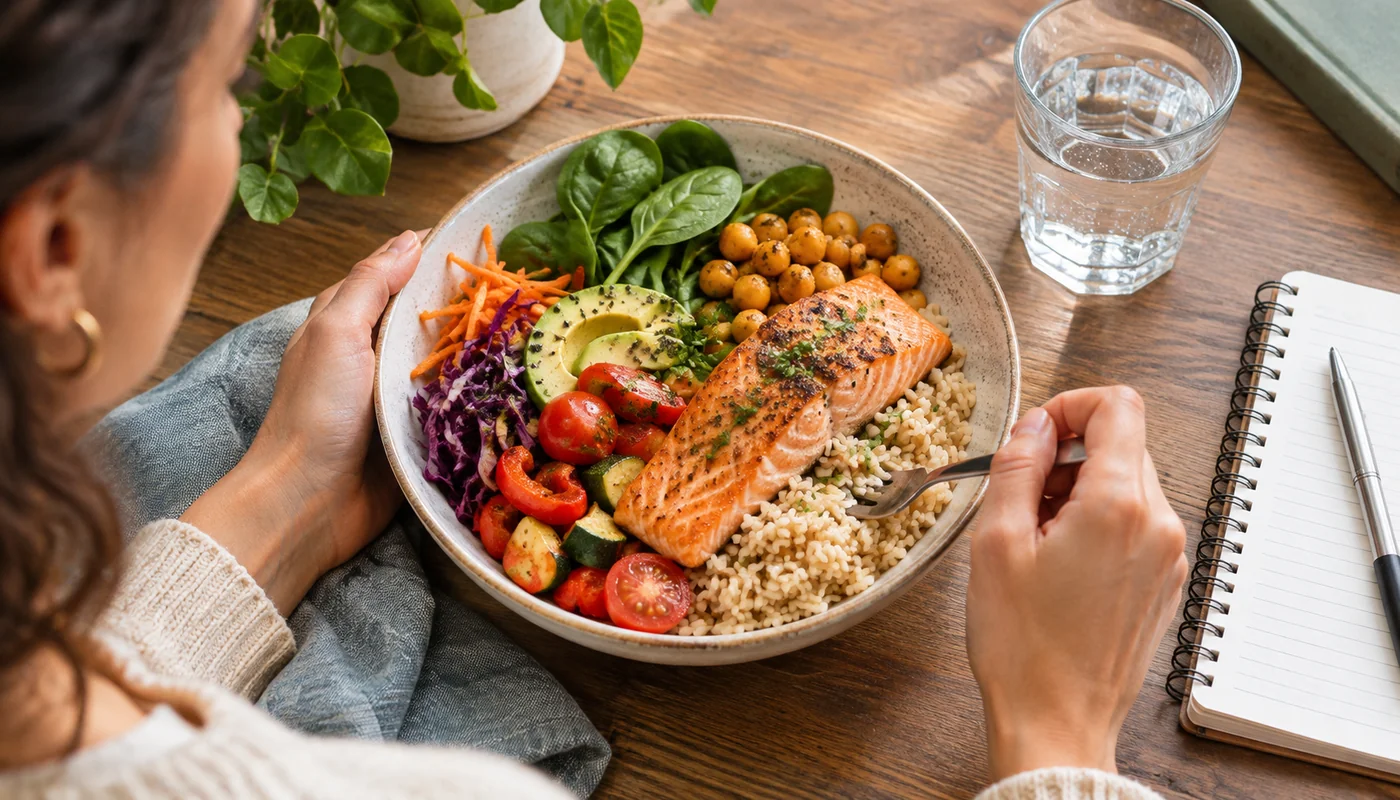
- A salad with salmon, beans, and olive oil
- Apple slices with almond butter
Keep Lunch Moderate
A lighter, balanced lunch helps you avoid the afternoon crash. Save larger meals for the evening if you need to focus in the afternoon.
Snack Smart
If you get hungry between meals, choose snacks like nuts, fruit, yogurt, hummus with vegetables, or cheese with whole-grain crackers.
Don't Skip Meals
Long gaps without food can leave you irritable, distracted, and unable to concentrate.
Stay Hydrated
Start the day with a glass of water and keep a bottle on your desk. Herbal teas count too.
A Focus-Friendly Day of Eating
- Breakfast: Scrambled eggs with spinach on whole-grain toast, plus a cup of coffee or tea
- Mid-morning snack: A handful of almonds and a few berries
- Lunch: Lentil and vegetable soup with a side salad and olive oil dressing
- Afternoon snack: Greek yogurt with pumpkin seeds, or green tea with a square of dark chocolate
- Dinner: Baked salmon with quinoa and roasted vegetables
Food Is One Part of the Focus Puzzle
Good nutrition works best alongside other healthy habits. Combine a focus-friendly diet with:
- Seven to nine hours of sleep
- Regular physical activity
- Short breaks throughout the day
- Fewer digital distractions
- Regular attention training, such as mindfulness or brain games that challenge your focus
Frequently Asked Questions
What is the best food for concentration?
There's no single best food, but eggs, oats, oily fish, berries, and nuts are all excellent choices.
What should I eat before an exam or important meeting?
A balanced meal with protein, whole grains, and fruit, eaten an hour or two before, plus water. Avoid heavy or very sugary foods.
Do sugary snacks help focus?
They may give a brief boost, but often lead to an energy crash that makes focusing harder.
Can drinking water improve concentration?
Yes. Even mild dehydration can impair attention, so staying hydrated helps.
Key Takeaways
- Your brain needs steady fuel to stay focused.
- Slow-release foods help avoid energy crashes.
- Eggs, oats, fish, berries, nuts, and greens support concentration.
- Sugary snacks and heavy meals can hurt focus.
- Regular balanced meals and water keep attention steady all day.
Feeding your brain well is one of the simplest ways to sharpen your focus. Start with a balanced breakfast and a bottle of water tomorrow, and notice the difference a well-fueled mind can make.
This article provides general educational information and is not medical advice. A qualified healthcare professional can help you evaluate choices in relation to your health history, medications, and individual needs.